

Stanley Park is one of Vancouver’s most iconic and largest urban forest parks. Located near the city center, it stands in sharp contrast to the towering residential and business complexes surrounding it. What makes this park unique is that human intervention in its creation was minimal—nature itself served as the landscape designer. Read more on vancouver-name.
The Creation of Stanley Park
Situated on a peninsula, Stanley Park has a long and rich history. It was initially used by Indigenous peoples as a source of food and materials for centuries. Activity in the area increased during the Gold Rush of 1858. After the colonization of British Columbia by the British, settlers began to populate the peninsula. This continued until 1886, when the land was officially registered and transformed into Vancouver’s first park.
The park was officially opened in 1888 by Vancouver’s mayor, David Oppenheimer. It was named after Frederick Arthur Stanley, the sixth Governor General of Canada. Covering approximately 400 hectares, Stanley Park is larger and more popular than New York’s Central Park.
What Makes Stanley Park Unique
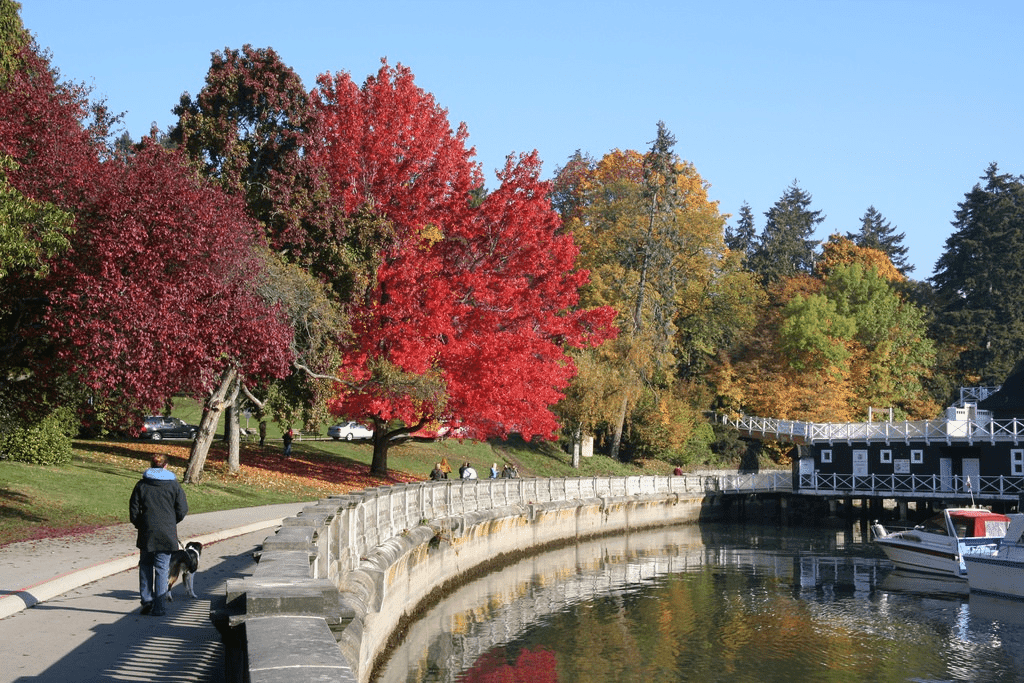
From the outset, the park’s development aimed to preserve its natural landscape. Footpaths were designed to wind around trees and shrubs, minimizing their removal. The total length of pathways is about 250 kilometers, with the longest trail encircling the park at 8.8 kilometers. This perimeter route is one of the park’s most popular attractions, allowing visitors to walk, bike, or scoot while enjoying views of Burrard Inlet on one side and dense forests on the other.
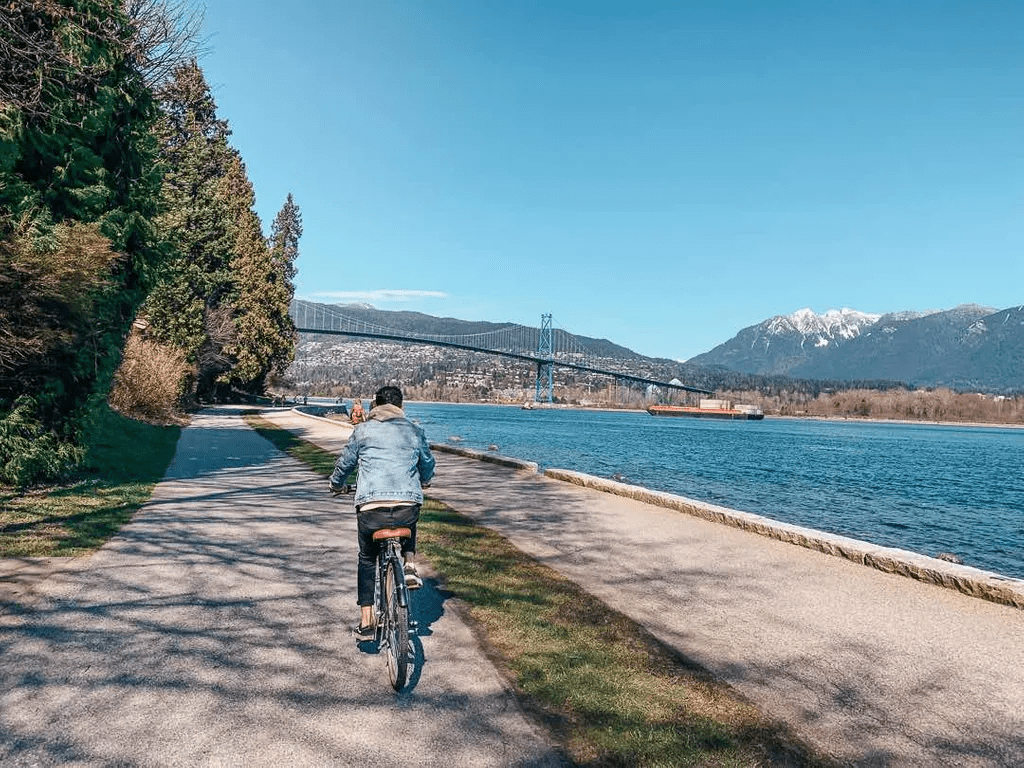
Open spaces within the park feature sports and recreation areas, including a golf course, tennis courts, and a summer theatre. Nearly surrounded by water, the park also boasts several beaches located along Burrard Inlet and Vancouver Harbour. To the north, the park connects to the mainland via the Lions Gate Bridge.
Stanley Park’s scenic beauty is enriched by its lakes and mountain views. The park is home to nearly half a million trees, some of which reach heights of 80 meters and have stood for centuries. Since 1992, park staff have trimmed and reinforced overly tall or unstable trees to ensure safety.
The park is also a haven for wildlife, hosting over 200 bird species, including the rare blue heron, which has about 170 nests within the park. Beavers are commonly found near the lakes, while rabbits, coyotes, grey squirrels, skunks, and raccoons inhabit the forested areas.
Human Contributions to the Park
Stanley Park remained largely untouched until 1911, when significant changes began to shape its landscape.
Trees were cleared for the construction of a children’s railway, and new saplings were planted in the cleared areas. The park also became home to an aquarium and a wildlife pavilion. The Stanley Park Aquarium houses around 70,000 marine animals, including dolphins, whales, seals, and sea lions. It is the largest aquarium in Canada, and part of the revenue from ticket sales goes toward marine conservation efforts.
The park features numerous monuments, statues, and sculptures commemorating historical figures and events. Among them are tributes to poet Robert Burns, Olympic runner Harry Jerome, and the “Girl in a Wetsuit” sculpture.
Several lakes within the park allow visitors to rent boats or pedalos, offering a tranquil escape in the middle of nature.
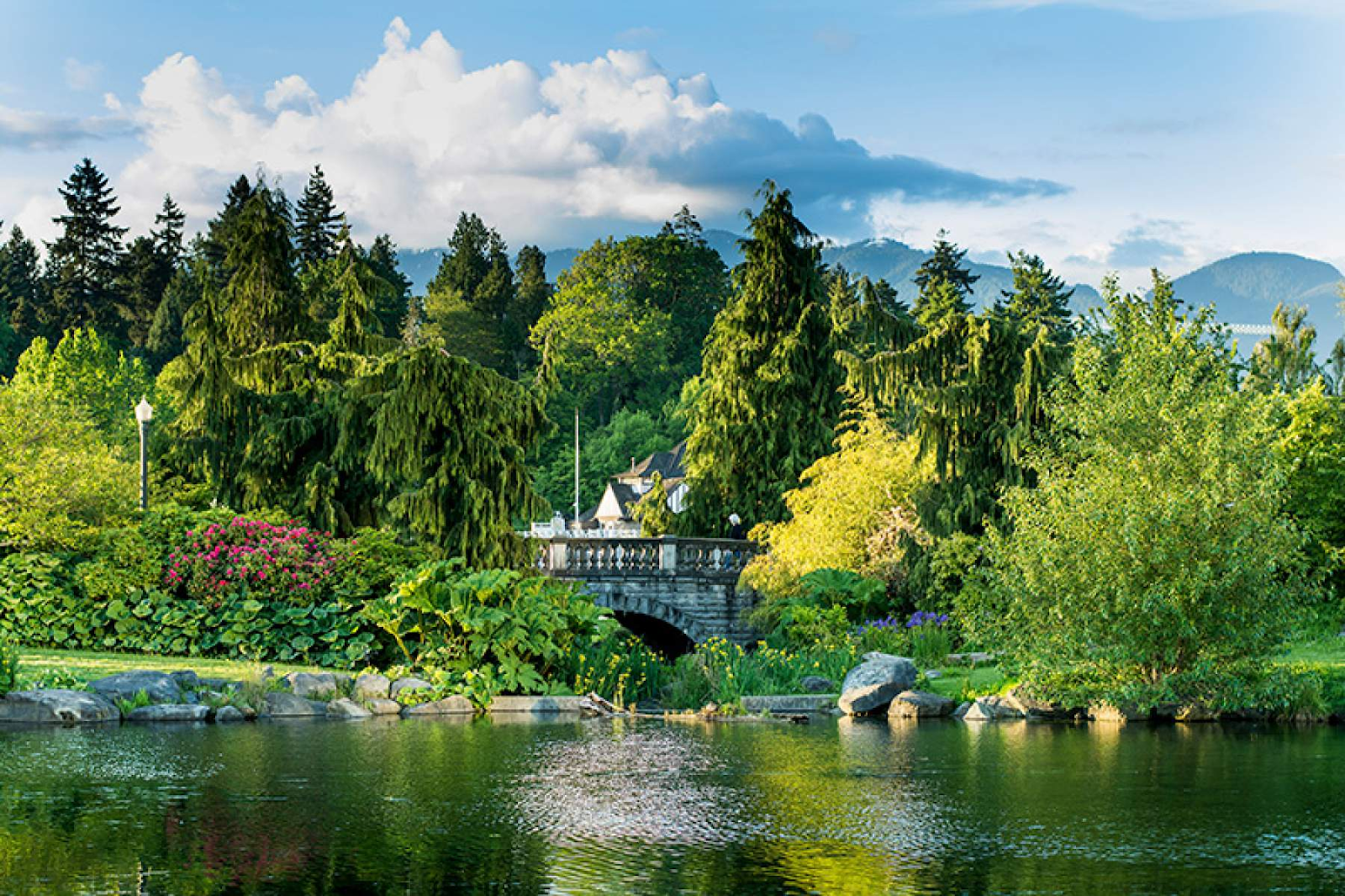
Despite its development, Stanley Park remains as lush and densely forested as it was when it first opened in the 19th century. Its careful balance of natural beauty and urban convenience continues to attract millions of visitors annually, cementing its status as one of Vancouver’s most beloved landmarks.