

Park · Vancouver · ⭐ 9.3/10 · 3631 reviews · updated: 2026-08-04 20:18:41
Address: 1300 Pacific Blvd, Vancouver, BC V6Z 2Y1, Canada
David Lam Park — Yaletown’s green room on False Creek
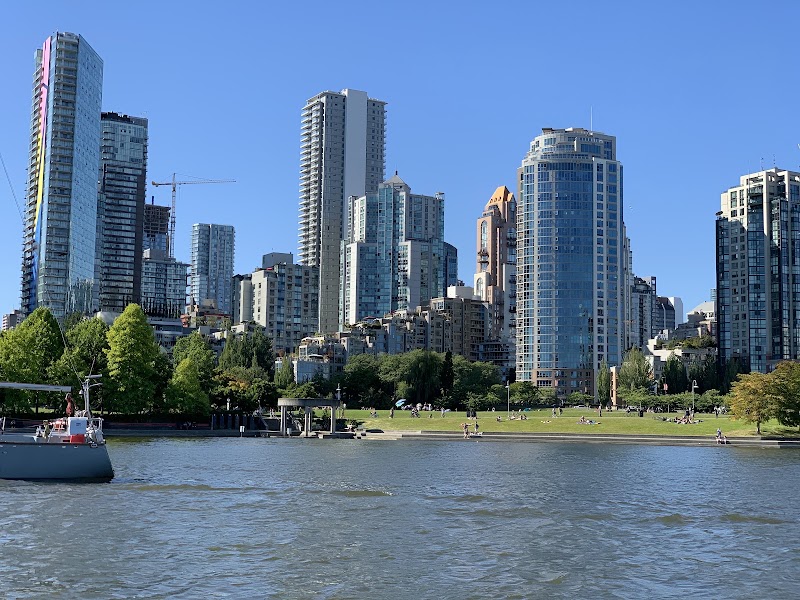
Where Yaletown’s brick warehouses run out of land, the city hands the shoreline over to grass. David Lam Park lays roughly 4.3 hectares of lawn, cherry trees, courts and seawall along the north side of False Creek — close enough to downtown that the towers stand upside down in the water, quiet enough that on a weekday morning the loudest sound is a paddle. It was the first and remains the largest of the parks built into the redevelopment of the old Expo 86 lands, and it still does exactly what its designers intended: it gives a neighbourhood of glass towers somewhere to lie down.
Highlights
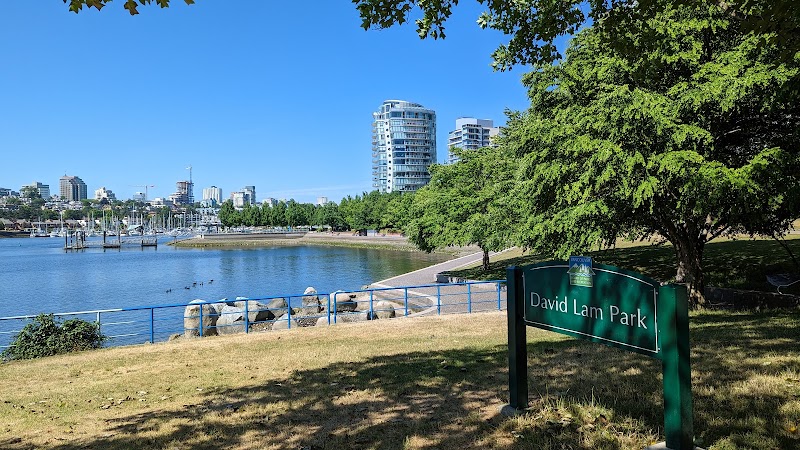
- The False Creek seawall — the park straddles one of the busiest stretches of Vancouver’s continuous waterfront path, so you can set off east toward Science World or west toward Granville Island without ever leaving the water’s edge.
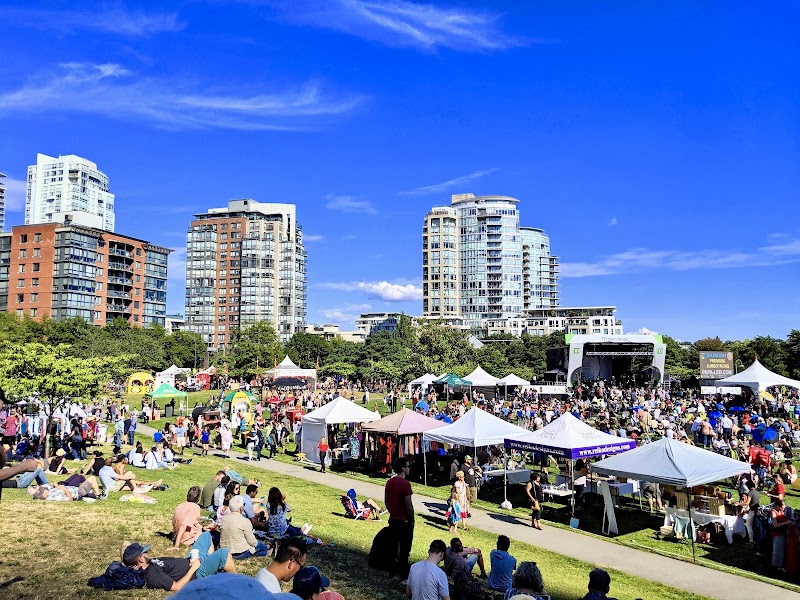
- The great lawn — a sand-based open playfield generous enough to hold a festival stage, a pickup football match and several hundred picnic blankets at the same time.
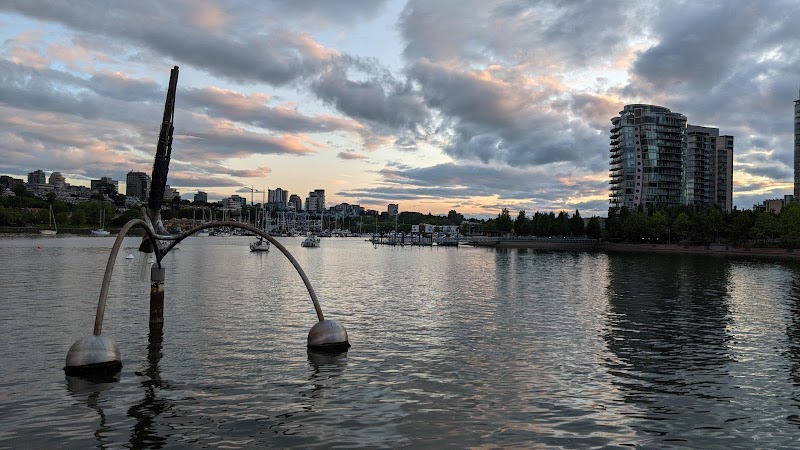
- Marking High Tide and Waiting for Low Tide — a pair of shoreline works by the landscape architect Don Vaughan, a circle of stones and a concrete ring carried on columns, set where the neighbourhood’s main axes meet the water so that the tide itself becomes part of the sculpture.
- Roughly a hundred Akebono cherry trees — pale pink for a fortnight each spring, and the reason the Vancouver Cherry Blossom Festival brings its big outdoor picnic here.
- The jazz weekend — for decades the TD Vancouver International Jazz Festival has handed the lawn over to free outdoor stages, food trucks and family programming in the closing days of June.
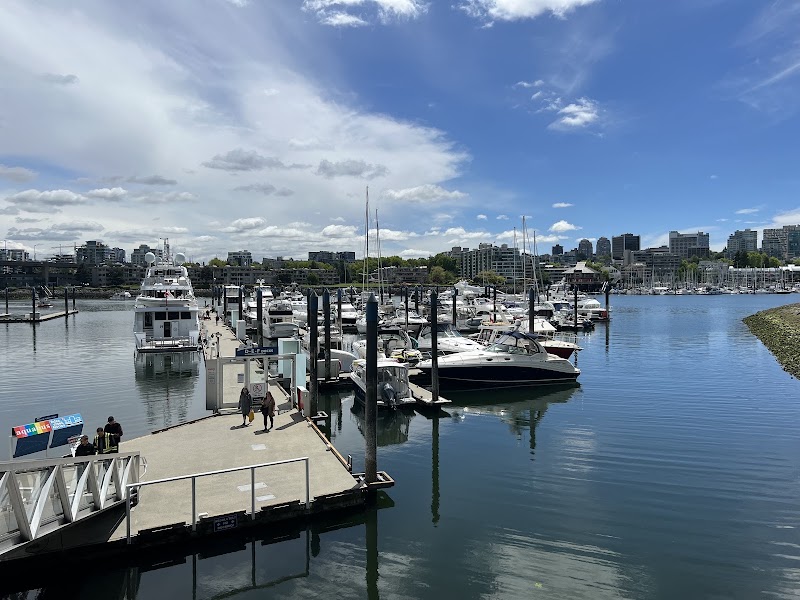
- Courts, playground and a ferry landing — two tennis courts, two basketball courts, a children’s playground screened by planting, and the park’s own dock for the little False Creek passenger boats.
What you’ll find
The park is deliberately split in character. The waterfront edge is all movement — the seawall, the ferry dock, the sculptures, benches turned toward the water. Behind it the ground lifts gently into open lawn, and behind that again sit the harder surfaces: courts, plaza, playground, and a saltwater pump station dressed up as a piece of civic architecture. Mature trees, cherries and dense shrub beds screen the sports areas from the picnic ground, so a tennis match and an afternoon nap can happen twenty metres apart without either party noticing the other.
- A large sand-based open playfield used for football, frisbee, festivals and sunbathing.
- Two tennis courts and two basketball courts, on a first-come basis.
- A children’s playground with climbing structures, sheltered on three sides by planting.
- A paved waterfront promenade shared, in marked lanes, by walkers and cyclists.
- Public washrooms, drinking fountains and a great many benches facing south over the water.
- A passenger-ferry landing and a hard-surfaced plaza that doubles as the festival stage ground.
Things to do — and who it’s for
- Runners and cyclists — the park is a natural staging point on the seawall, with flat, uninterrupted kilometres in both directions and water on one side the entire way.
- Families with small children — playground, lawn, washrooms and a smooth path for scooters, all within sight of a single picnic blanket.
- Festival-goers — jazz at the start of summer, blossom in spring, and a steady programme of smaller community events on the plaza through the warm months.
- Downtown workers — a lunch hour on the grass that costs nothing and puts a marina, a mountain range and a skyline into a single view.
- Photographers — the north bank faces south across the water, which means backlit towers at dusk and the whole downtown skyline mirrored on a still morning.
- Visitors travelling without a car — the dock turns the park into a stop on a water route that links Granville Island, Science World and the Olympic Village.
Getting there & practical
The park belongs to Yaletown, on the southern shore of the downtown peninsula. The simplest approach is the Canada Line to Yaletown–Roundhouse Station, from which it is a walk of a few minutes downhill to the water; the Expo Line and the downtown bus network put you within a fifteen-minute stroll. Far more enjoyable in fine weather is to arrive by water — the small False Creek passenger ferries call at the park’s own landing on routes that also serve Granville Island, the Olympic Village and Science World. There is no gate, no ticket and no closing time: the park and the seawall are open around the clock and the promenade is lit at night. Public washrooms are on site. Dogs are welcome on a leash; this is not an off-leash park. Kerbside parking in the surrounding blocks is metered and disappears entirely on festival days, which is one more argument for transit or the boat. Allow an hour for a stroll and a coffee, half a day if you intend to walk the seawall properly in either direction.
When to visit
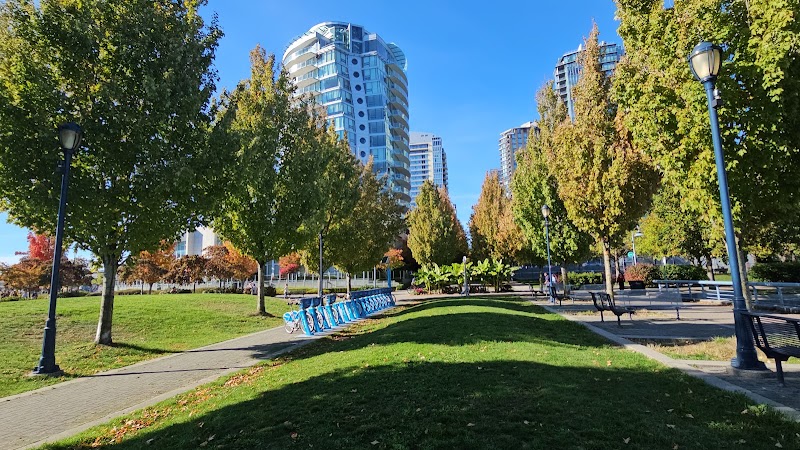
Spring is the park’s showpiece: the Akebono cherries open in the last days of March and hold into April, and for a fortnight the lawn fills with people eating lunch under pink. Summer is the loud season — the jazz weekend at the end of June, dragon boats and pleasure craft working the creek, the grass occupied from noon until the light finally goes after nine. Autumn is arguably the best time to actually enjoy the place: warm afternoons, thinning crowds, and cherry and maple leaves turning against the glass of the towers. Winter is quiet and often wet, but Vancouver rarely freezes, the seawall stays walkable every day of the year, and a clear cold morning in January delivers the sharpest view you will ever get of fresh snow on the North Shore mountains standing above the skyline.
Good to know
Everything here is younger than it looks. Until the mid-1980s this was rail land and industrial fill. Yaletown took both its name and its first population from the Canadian Pacific Railway, which shifted workers and equipment down from the town of Yale in the late 1880s and built a locomotive roundhouse on this flat in 1888. CPR Engine 374, which pulled the first transcontinental passenger train into Vancouver on 23 May 1887, still stands a short walk inland inside that roundhouse, reopened in 1997 as the Roundhouse Community Arts and Recreation Centre. The waterfront itself was the site of Expo 86; after the world’s fair the lands were acquired by Concord Pacific and master-planned as Concord Pacific Place, with about fifty acres set aside for public parks. David Lam Park was the flagship of that plan, laid out by the Vancouver landscape architect Don Vaughan — it was his firm’s first project drawn on computer — and named in 1995 for David See-Chai Lam. Born in Hong Kong in 1923, Lam came to Vancouver with his wife Dorothy and their three daughters in 1967, built a career in property, gave much of the proceeds away to universities and community institutions, and in 1988 became the 25th Lieutenant Governor of British Columbia, the first Chinese Canadian appointed to a vice-regal office in Canada. He served until 1995 and died in 2010. Vaughan’s two shoreline sculptures, added at the turn of the millennium, were his answer to a question the whole redevelopment raised: how do you keep a tidal edge legible once a city has built right up to it.
Visitor tips
- Come early on jazz weekend if you want lawn near the stage; by mid-afternoon the good ground is taken and the food queues are long.
- The seawall here is a shared path with marked lanes — stay on the pedestrian side, because the cycle lane carries commuters at speed.
- For blossom photographs aim for the first week of April and shoot in the morning: the light comes across the water and the lawn is still empty.
Questions & answers
Is there an entrance fee? No. The park, the lawn, the seawall and the sculptures are free and open at every hour. Individual festivals may sell tickets for particular indoor stages, but the park’s own outdoor programming has traditionally been free.
Who was David Lam? David See-Chai Lam (1923–2010) was a Hong Kong-born banker who became a Vancouver property developer and philanthropist, and served as Lieutenant Governor of British Columbia from 1988 to 1995 — the first Chinese Canadian to hold a vice-regal office in Canada. The park was named in his honour in 1995.
Can I swim in False Creek here? No. This is a working urban waterway with boat traffic and no beach, and swimming is not appropriate. Supervised saltwater swimming is available at the beaches west of the downtown peninsula.
Is the jazz festival really free? The weekend of outdoor programming staged in the park has traditionally been free to attend, running alongside ticketed concerts in venues elsewhere in the city. Check the festival’s own schedule each June, because dates and venues shift from year to year.
Are dogs allowed? Yes, on a leash. There is no fenced off-leash area inside the park itself; off-leash areas exist elsewhere along the creek.
How do I get here without a car? Take the Canada Line to Yaletown–Roundhouse Station and walk a few minutes downhill, or arrive on one of the small False Creek passenger ferries, which call at the park’s dock on routes from Granville Island, Science World and the Olympic Village.
What is there for children? A playground with climbing structures, a very large lawn, a smooth paved loop for scooters and balance bikes, and the ferries themselves, which most small children treat as the main attraction of the day.
When do the cherry trees bloom? The Akebono cherries here usually open in the final days of March and hold for one to two weeks into April, weather depending; the Vancouver Cherry Blossom Festival times its big outdoor picnic to that window.
Is it accessible for wheelchairs and prams? Yes. The seawall promenade and the plaza are paved and level, ramped connections lead up to the neighbourhood, and the lawn is reachable without steps from several points along the path.
Photos
Show 1 more photos
Visitor reviews
Reviews last updated: 2026-08-04 20:18:41
Data is refreshed monthly. Sources: vancouver-name.com and editorial picks based on reviews.
David Lam Park is a public park located in Vancouver, British Columbia, Canada. It is named after David See-Chai Lam, the 25th Lieutenant Governor of British Columbia. The park is known for its beautiful surroundings and…
I went for a walk along the river. Yesterday I walked from Sunset Beach to English Bay, where it joins the ocean. Today I went a different way. It was a leisurely stroll through the park and across the lawn after work. P…
We were here when the trees were in bloom and ran into a huge number of people. The park is very cool, well kept, right on the shore. It's located in a great neighbourhood with lots of cafés, so bring a blanket, coffee/s…
Wow, one of the best places to see the cherry blossoms! There's a cherry blossom festival held here, but what made it special was precisely the blossoms after dark. There's a huge, well-kept grassy field right by the wat…
Sail into the Pink Sea: Discover David Lam Park's Charm! ⛵
Ventured to David Lam Park in Downtown Vancouver and found a peaceful retreat. The park, known for its stunning cherry blossoms, truly lives up to the hyp…