

Canada is truly an incredible country, writes vancouver-name. Its culture, architecture, traditions, and, of course, its people inspire great admiration and interest.
Vancouver is one of Canada’s largest metropolises. The city’s high quality of life and continuous development have been evident since its early days. A drive for innovation and improvement is one of Vancouver’s most distinctive features. Additionally, this city and its surrounding areas provide the country with various resources—from environmentally friendly products to valuable minerals.
Mines are a great asset to any region. Their presence ensures that the local area will never face economic hardship, as mining provides significant income. Not to mention the employment opportunities that mines create for the population.
However, unfortunately, mineral extraction often results in truly tragic and catastrophic consequences for the environment.
In this article, referencing vlms.ca, we will discuss a Vancouver mine that no longer exists. Despite its closure, it remains one of the most famous and wealthiest mines in the history of Canada and Vancouver. Additionally, it is notable for the fact that after its official shutdown, the area where it was located returned to its original state. Even more impressively, all living organisms in the region were able to fully recover. This remarkable transformation serves as yet another testament to the incredible resilience of Mother Nature.
Location
The Island Copper Mine was located near Port Hardy in Vancouver’s northern region. At the peak of its popularity and productivity, the mine employed nearly a thousand people.
By the time mining operations ceased, the pit had reached a depth of 1,320 feet. At that time, this was the lowest point on the planet. Previously, the lowest point had been a site near the Dead Sea.
The mine’s tailings were dumped into Rupert Inlet. Given the mine’s close proximity to the ocean, a massive wall had to be constructed to ensure the safety of the pit.
The End of an Era
In 1996, when mining operations came to an end, the pit was flooded. However, environmental monitoring continued both at the former mine site and in the inlet.
The results of the monitoring confirmed that the bay’s marine life had fully returned to its pre-mining state. Even populations of shrimp and crabs were able to recover.
High Productivity
Each month, the mine produced approximately 30 tonnes of lead, with a 27% copper content. However, copper was not the only resource extracted from this site. Other valuable minerals, including molybdenum, gold, silver, and rhenium, were also mined. These resources were transported to the market using trucks.
Conclusion
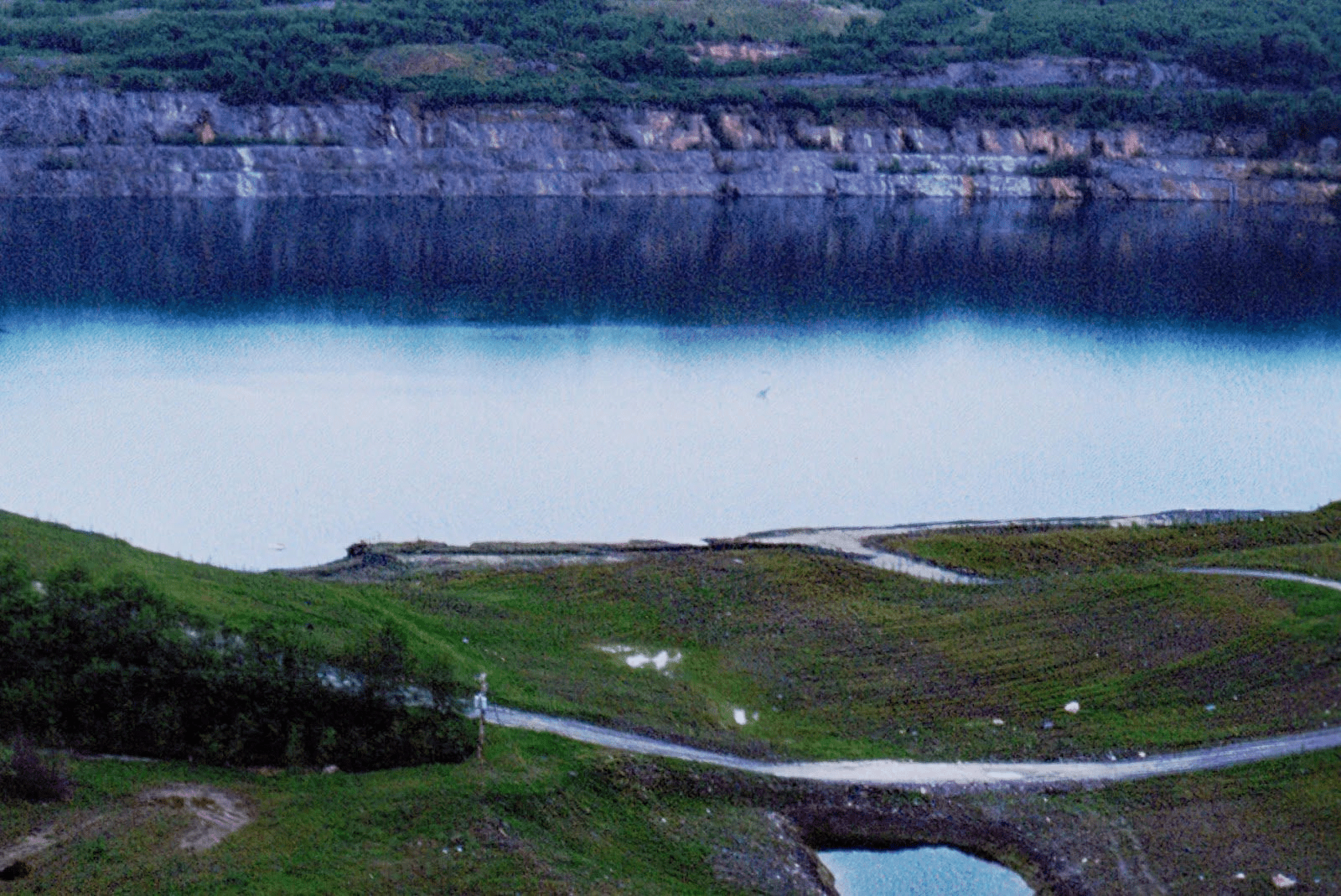
Based on everything discussed, one key conclusion can be drawn. While it is somewhat regrettable that the mine in question could not be preserved, it is reassuring that the region’s wildlife has fully recovered. As we know, any form of mineral extraction has a significant negative impact on the environment.
The fact that the area has returned to its original natural state serves as undeniable proof of nature’s power and resilience. Regardless of human efforts to dominate or reshape the environment, nature ultimately prevails. Humans are merely a part of nature’s grand creation, and this is something that must never be forgotten.