

Solving our biggest environmental challenges hinges largely on innovative chemical technologies. The chemical industry—a global $4 trillion sector—is crucial to our daily lives, supplying essential materials for 95% of all manufactured goods worldwide. However, it is also the largest energy consumer among industrial sectors and the third-largest source of direct carbon dioxide emissions. Therefore, it is critically important for the chemical sector to drive a future focused on conservation and net-zero emissions, operating within the safe boundaries of Earth’s ecosystems. Today, we delve into the harm caused by the chemical industry and how Vancouver is tackling this massive problem. More on vancouver-name.
The Planet’s Chemical Footprint
Canada is a world leader in the low-carbon intensity production of chemicals and plastics. The Chemistry Industry Association of Canada (CIAC) actively supports government policies that enable these sectors to create innovations for a healthier environment and contribute to the transition to a low-carbon economy.
Currently, humanity is consuming resources at a rate that exceeds the planet’s ability to regenerate them by 1.75 times. This level of consumption is utterly unsustainable. Worse still, it has already led to the breach of seven out of the eight safe planetary boundaries that maintain natural stability. We are standing at the precipice of irreversible changes. Global awareness of climate chaos and the massive loss of biodiversity is growing. Thanks to extensive media coverage, dedicated activists, and scientific warnings, people worldwide are increasingly demanding decisive government action to combat these crises. Meanwhile, chemical pollution and the damage it inflicts on our well-being and the planet’s future remain an existential threat.
In a seminal work, environmental journalist Rachel Carson warned of an equally dangerous crisis: the impact of harmful substances, such as uncontrolled industrial chemicals, pesticides, and other hazardous materials. Her book, “Silent Spring” (1962), first drew widespread attention to this issue and is considered the starting point for modern environmental problem-solving. Today, this crisis is just as serious and threatening as it was then.
Canada’s Environmental Legislation: The Need for Reform
In 2025, the Senate of Canada is reviewing Bill S-5, a federal government initiative aimed at reforming the Canadian Environmental Protection Act (CEPA)—Canada’s foundational environmental law designed to protect the population from exposure to harmful toxic substances. It has been over two decades since CEPA was last updated. During this time, the human impact of new and dangerous substances has only escalated.
As a result, CEPA is severely outdated and incapable of effectively protecting Canada’s environment. Although Bill S-5 addresses a crisis of global magnitude that threatens the biological and physical processes supporting life, the initiative has not received the attention it deserves. Yet, this doesn’t change the fact that chemical pollution is a serious global problem affecting lives and ecosystems worldwide. Human interaction with new and innovative chemical substances continues to grow, as has the volume of chemical use since “Silent Spring” was written. The production of these substances has increased by 50 times since 1950, and that figure is expected to triple by 2050.

The Government of Canada, responsible for assessing and regulating new chemicals, is simply not keeping pace with this growth. Consequently, scientists have concluded that the current level of chemical regulation exceeds the safe planetary boundaries.
Vancouver’s Response: PH7 Technologies
Vancouver is at the forefront of developing new chemical processes that allow for the extraction of critical minerals with minimal environmental impact. This will help British Columbia transition to an ecologically clean economy.
For example, Vancouver-based PH7 Technologies has created its own closed-loop process using advanced chemistry to extract and refine critical metals, helping the mining sector shift towards renewable energy in an environmentally and economically sustainable way. The new process also allows for the profitable extraction of metals from low-grade resources or complex substrates. The resulting metal alloys, including Platinum Group Metals (PGMs), copper, and tin, are then processed by industrial clients. Thanks to an $850,000 grant from the Innovative Clean Energy (ICE) Fund, pH7 Technologies conducted a pilot project that processes 5,000 kilograms of raw materials daily. This is projected to extract approximately 2,500 kg of PGMs annually. This method significantly reduces greenhouse gas emissions, electricity consumption, and water use compared to traditional mining or other refining processes.
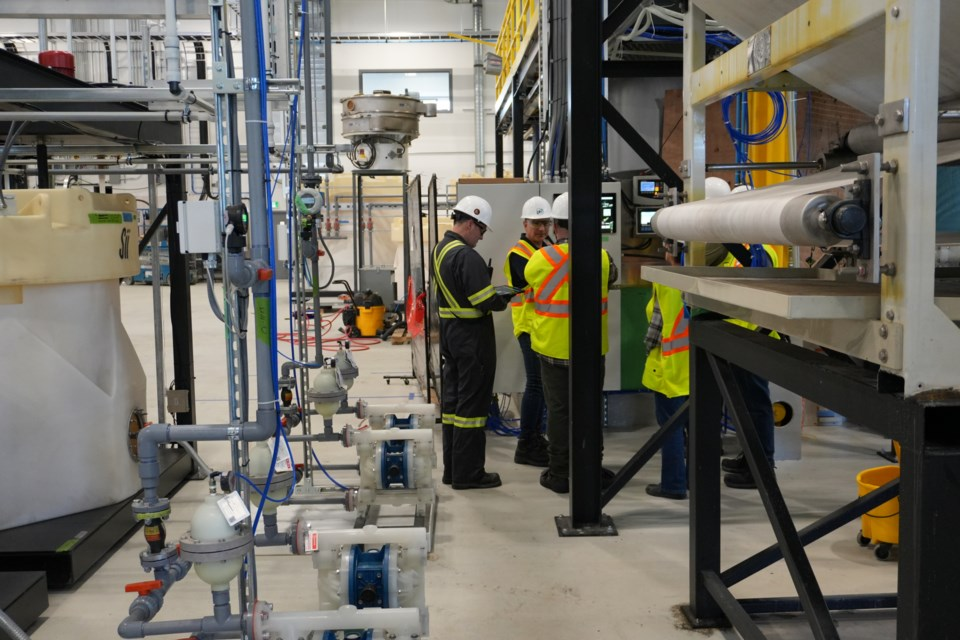
PH7 Technologies notes that it sees significant potential in achieving a zero-emission profile through its technologies. Company representatives also credit the support from the Provincial ICE Fund as playing a crucial role in the development and commercialization of their innovations. PH7 emphasizes that building a clean and green future requires far more critical metals than are currently available. However, the company is committed to scaling up metal extraction through innovation and strategic partnerships.
The ICE Fund was established to support Vancouver’s clean energy sector. It facilitates the development of technologies for clean, renewable energy production, lowering costs and helping to protect the environment by backing projects that reduce fossil fuel consumption. This initiative aligns with the CleanBC Roadmap to 2030—British Columbia’s plan to expand and accelerate climate action. It capitalizes on the province’s natural advantages: access to clean electricity, high-quality natural resources, and a skilled workforce.
PH7 Technologies and ICE: Fast Facts
- PH7 Technologies was founded in 2020, is headquartered in Vancouver, and recently made the 2024 Global Cleantech 100 list by Cleantech Group.
- The innovators working on ICE Fund projects are drivers of change, establishing partnerships, and developing and implementing technologies that advance Vancouver’s transition to a low-carbon economy.
- British Columbia’s clean energy sector is growing rapidly, accounting for approximately 20% of all clean technology companies in Canada.
- Since 2008, the ICE Fund has allocated approximately $112 million to support projects in pre-commercial clean energy technologies, eco-friendly transportation, research and development, and energy efficiency programs.
- ICE partners include federal government agencies, universities, local governments, First Nations, and many emerging technology companies and organizations across British Columbia.